Peer-reviewed article · 2026
Differentiating indicators of vulnerability to deliberate self-harm in forensic and non-forensic patients with schizophrenia spectrum disorders: A multinational LASSO-based analysis
Iozzino L, Martella D, Toffol E, Torino G, Caselani E, Leone S, Heitzman J, Wancata J, Picchioni MM, de Girolamo G
BMJ Mental Health, 29, e302372
Abstract
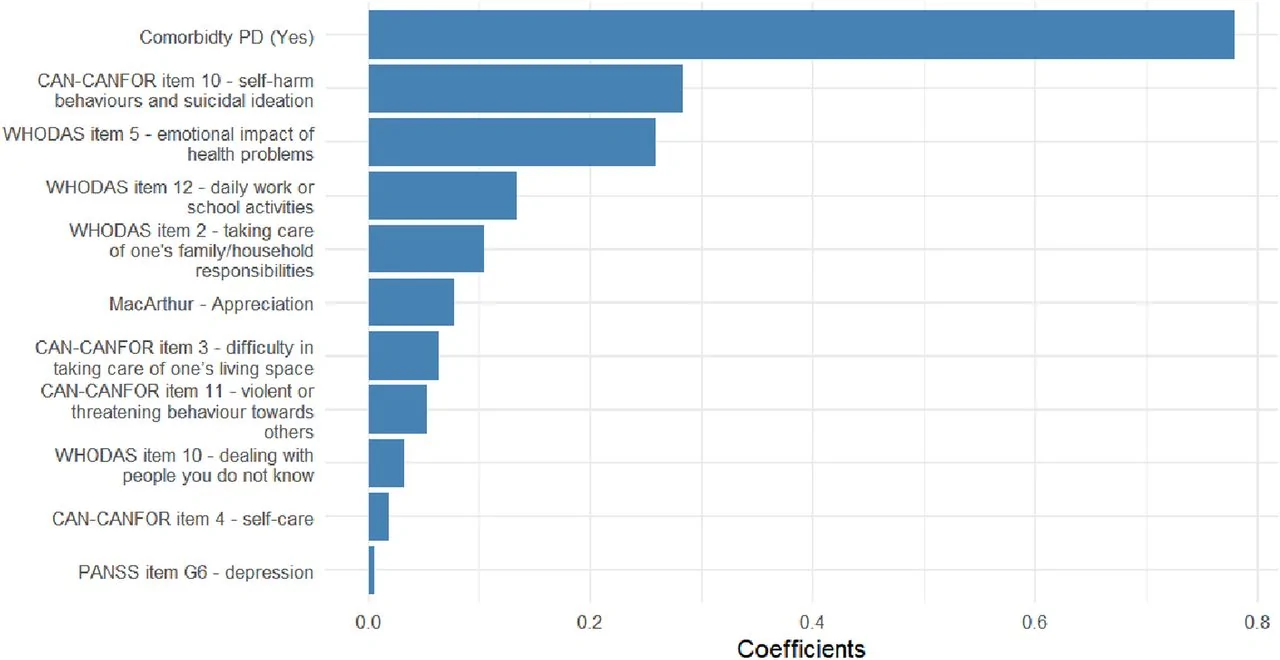
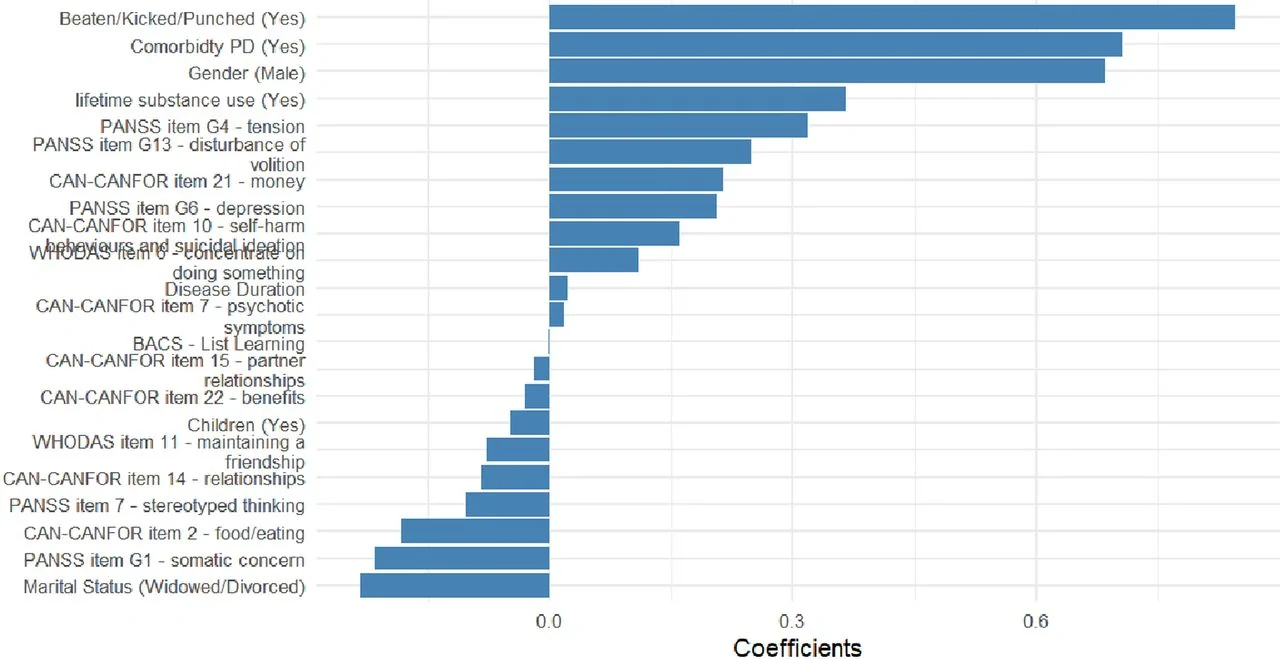
Background: Deliberate self-harm (DSH) is a major public health concern among patients with schizophrenia spectrum disorders (SSDs). Although forensic patients with SSD show high rates of DSH, they remain under-represented in suicidology research, and differences in risk profiles compared with non-forensic patients are poorly understood. Objective: To compare sociodemographic, clinical, neuropsychological and criminological correlates of lifetime DSH between forensic and non-forensic patients with SSD and identify subgroup-specific vulnerability markers. Methods: Data were drawn from the multinational EU-VIORMED study across five European countries. Participants (N=392) aged 18-65 years with a Diagnostic and Statistical Manual of Mental Disorders, Fifth Edition, diagnosis of SSDs completed standardised assessments. Lifetime DSH was measured dichotomously. Separate LASSO logistic regression models identified the strongest correlates of DSH in forensic and non-forensic subsamples. Findings: Lifetime DSH prevalence was high in both groups (45.9% forensic; 39.5% non-forensic). In forensic patients, the strongest correlate was comorbid personality disorder (β=0.78), followed by functional impairment (β=0.02-0.26). In non-forensic patients, interpersonal victimisation (β=0.85) was the strongest correlate, followed by personality disorder (β=0.71), male gender (β=0.69), lifetime substance use (β=0.37) and psychopathological indicators (PANSS (Positive and Negative Syndrome Scale) items; β=-0.10-0.32). Overall, DSH in forensic patients was more strongly associated with personality pathology and functioning, whereas in non-forensic patients it was linked to trauma, clinical severity and sociodemographic factors. Conclusions: Despite similar DSH prevalence, forensic and non-forensic SSD patients showed distinct patterns of associated factors, suggesting different mechanisms of risk. Clinical implications: Suicide prevention in SSD should adopt tailored risk formulations, emphasising personality pathology and functioning in forensic settings and trauma-informed, integrated care in non-forensic services.
Figures and tables
Reproduced without modification from: Iozzino L, Martella D, Toffol E, Torino G, Caselani E, Leone S, Heitzman J, Wancata J, Picchioni MM, de Girolamo G (2026). Differentiating indicators of vulnerability to deliberate self-harm in forensic and non-forensic patients with schizophrenia spectrum disorders: A multinational LASSO-based analysis. BMJ Mental Health, 29, e302372. https://doi.org/10.1136/bmjment-2025-302372. Licensed under CC BY 4.0.